
How Can You Help Your Cat Adjust to a New Apartment After You Move?
Give your cat one closed room on moving day, move them yourself in a carrier rather than in the truck, and set up a single quiet room at the new place before you let them out. Cats settle by smell and by territory, so the trick is to shrink their world down to one safe room and let them expand it on their own schedule.
Paul owns Triborough Trucking and works the moves himself, so the advice below is the order he handles it in on the job.
Where your cat should be while the crew is loading
The front door stays open for hours on moving day. That is the whole risk, and it is why the first decision matters more than anything you do at the new place.
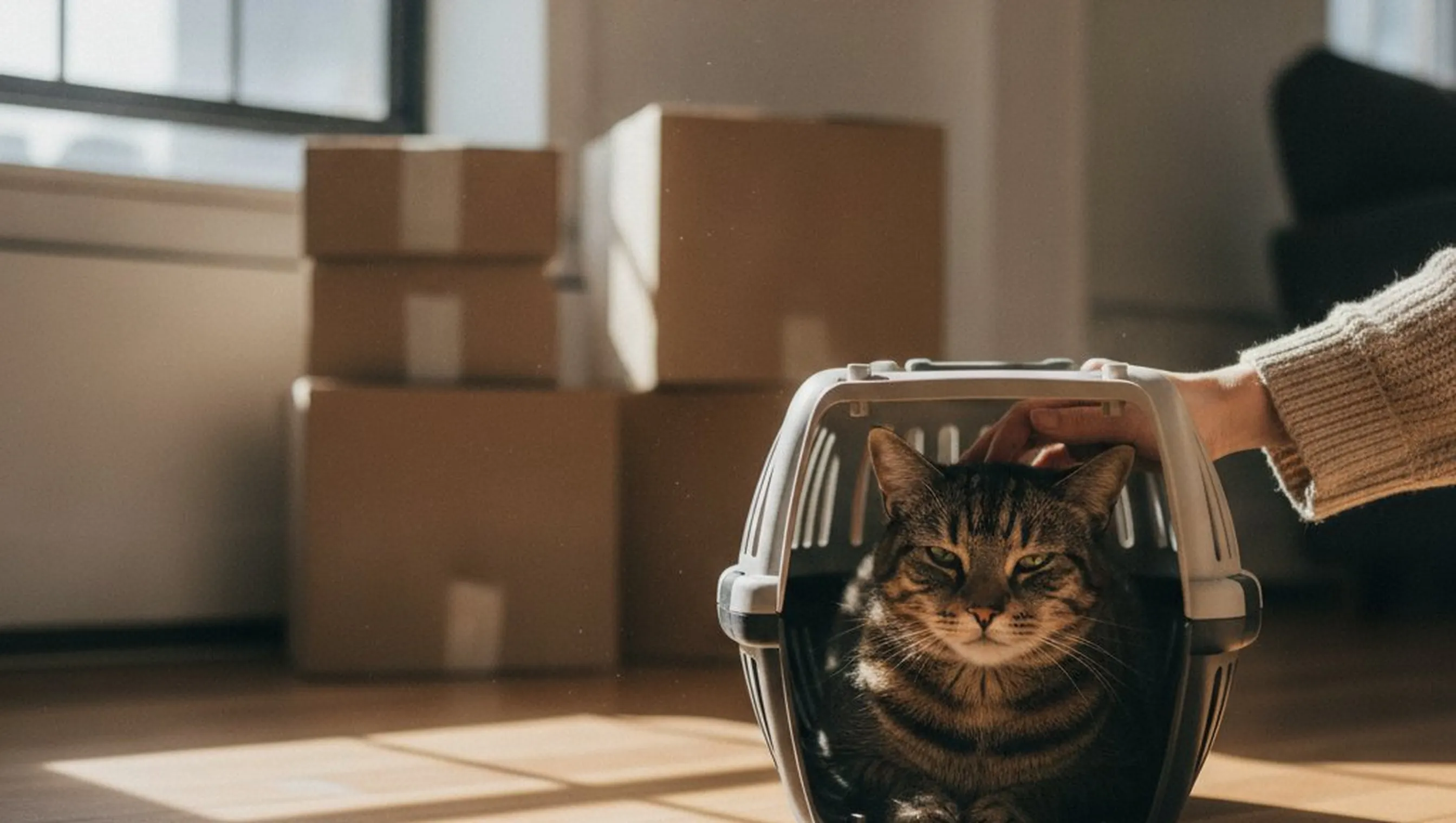
Paul's rule for moving day is simple: if there is no time to do anything else, close the cat into one room or the bathroom until everything else has been moved out.
One room, door closed, everything in it that the cat needs for a few hours. A bathroom works well in a small apartment because it is easy to empty last and there is nothing in there to get packed by mistake. Put a sign on the door. Tell every person carrying a box which door does not open. If someone can take the cat off-site for the day, that is better still, but a closed room with one person responsible for it is enough.
What to tell the movers before they start
Movers work fast and they are carrying furniture through doorways, which means their eyes are on the corners and the frames, not on what is moving around their feet.
Tell them at the start of the job, in plain words: there is a cat, watch for her, and she cannot be allowed to run out. On apartment moves in a walk-up or a building with a shared hallway, add the specifics: which door stays shut, whether the building door self-closes, whether the elevator is being held open, and where the cat will be at each stage. A crew that knows there is a cat behind that door behaves differently around it.
What should travel with you instead of in the truck
Your cat rides with you, in a carrier, with the door latched. Never loose in the car, never in the truck, never in a cardboard box.
Keep the things your cat uses every day out of the packing pile and with you: the carrier, the litter box, food and water bowls, a few days of their usual food, any medicine, and one blanket or bed that already smells like them. Do not wash that blanket before the move. The smell on it is the point. Make sure the collar and tag are on and that microchip details are current before moving day, because the one day a cat gets out is the day nobody can catch them in a hallway they do not know.
Set up the base room before the cat comes in
At the new apartment, pick one room and get it ready before the carrier comes through the door.
Paul's instruction is to put the carrier into the bathroom first and close the door. That is the whole method. Carrier goes in first, door closes, and the cat comes out into a small space that already has litter in one corner, food and water away from the litter, the familiar blanket, and somewhere to hide. A box on its side or the carrier left open with the door off works. Let them come out on their own. Sitting quietly in the room reading your phone does more than coaxing them out.
Keep them in that room while the crew finishes and the door is still opening and closing.
When to let your cat explore the rest of the apartment
Once the move is done and the doors are shut for the night, open the base room and let the cat decide. Most cats come out, walk the perimeter, find one hiding spot and go back to the base room for a day or two. That is normal. Leave the litter box where it is until they are using the new space comfortably, then move it a little at a time if you need it somewhere else.
Expect a quiet few days. Less eating, more hiding, more talking at night. It usually settles within about a week as the place starts to smell like them instead of like the last tenant.
Call your veterinarian if it goes past unsettled: your cat stops eating or drinking, stops using the litter box, breathes strangely, or hides for days without coming out. That one is for a vet to answer.
Tell us about the cat when you book the move
The easiest cat moves are the ones where the room, the person watching the door and the carrier were all decided before the truck showed up. If you are planning a local move in the city, tell us about the cat when you get a quote and we will work the door control into the plan. You deal with Paul directly, so the person you tell is the person on the job.
Talk to Paul, Who Will Be on the Job
Tell us about the cat when you call. To get a real quote, send photos or a video and call 347-392-0483.
Triborough Trucking, owner-operated movers in NYC for local and long distance moves across the five boroughs and New Jersey.